
EVT12S-BP30SR2
$1,258.00 Original price was: $1,258.00.$629.00Current price is: $629.00.
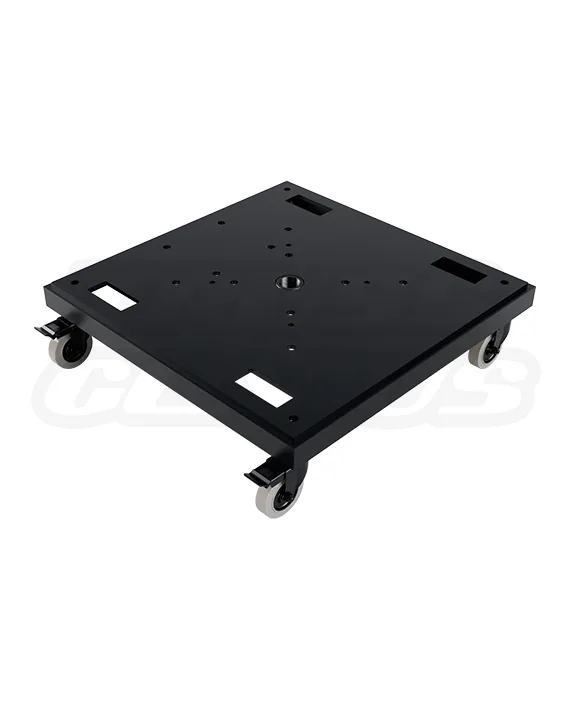
EVT12S-BP30SR2 — 30x30 Steel Base Plate – Heavy-Duty Black Truss Base
Dimensions & Specs
Dimensions: 30 in x 30 in (762 mm x 762 mm)
Plate Thickness: 0.35 in (9 mm)
Compatibility: Fits EVT12S (12″) and EVT20S (20.5″) Square Aluminum Truss
Type: Heavy-Duty Steel Base / Floor Plate
Construction
Material Type: Q235 Steel
Features: Integrated Carrying Handles, 1.5-Inch Schedule 40 Flange
Connection Type: Bolt-on Mount (Connecting Hardware Included)
Finish & Features
Surface: Matte Black Powder Coat Finish
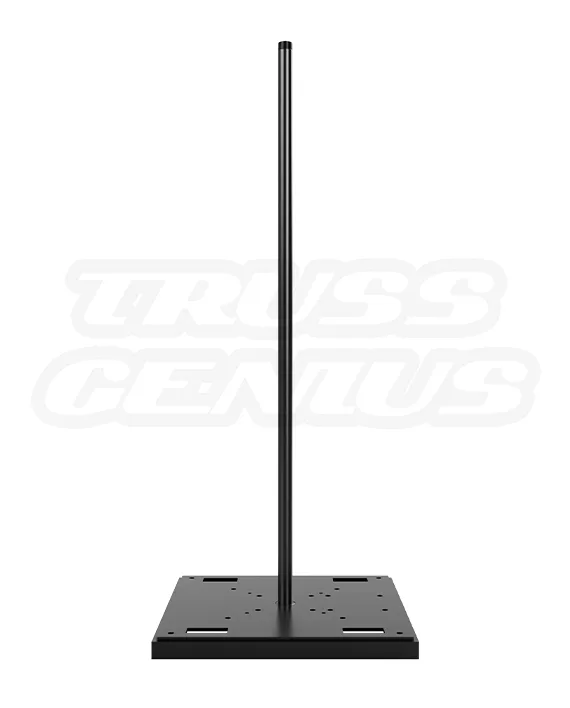
Application: High-stability base for lighting towers and large truss arches
Weight: 121 lb (54.88 kg)
In stock
Heavy-Duty Truss and Pipe Ground Support
30 x 30 Inch Heavy-Duty Steel Truss Base Plate.
2 Inch Raised Frame for Compatible Truss and 1.5 Inch Schedule 40 Pipe.
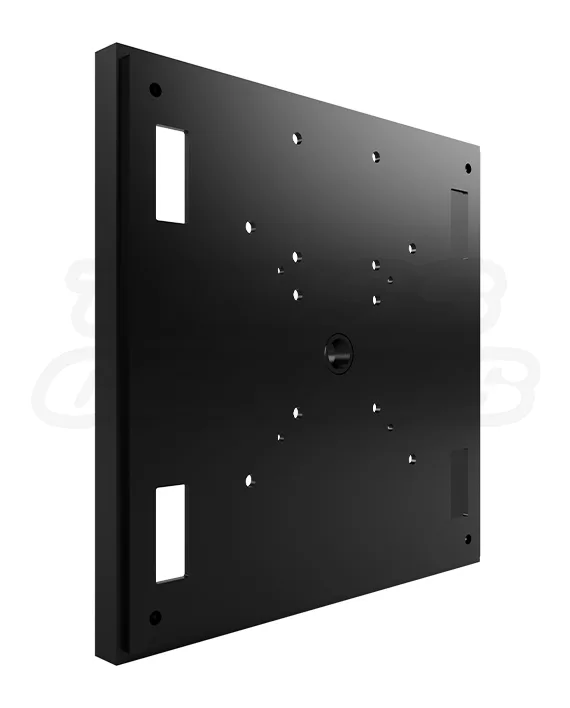
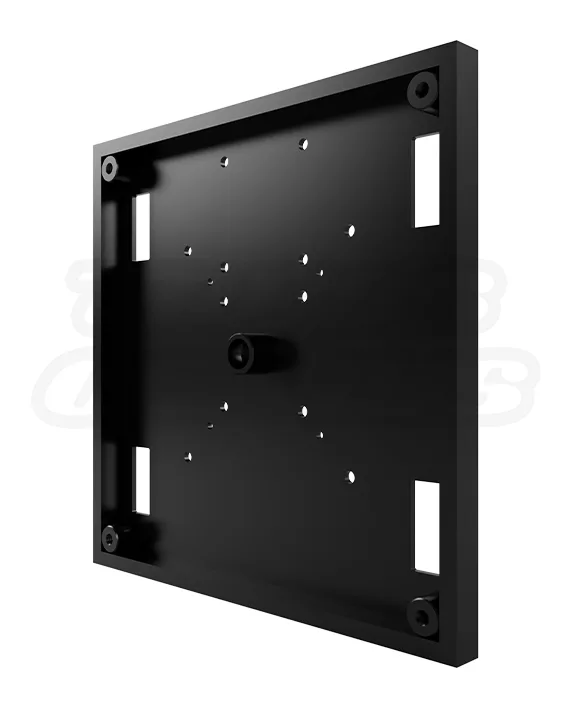
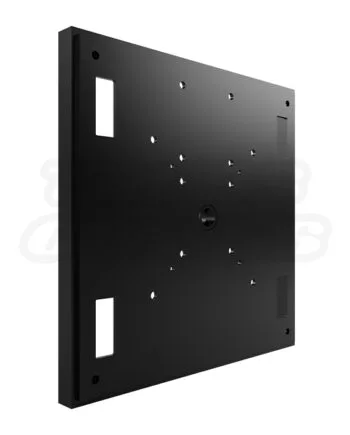
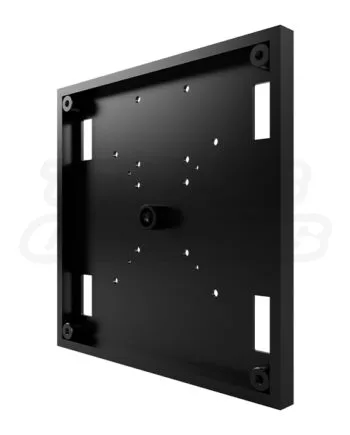
The EVT12S-BP30SR2 is a 30 x 30 inch heavy-duty steel truss base plate built from Q235 carbon steel. Its 9 mm plate sits on a 2 inch raised welded frame and includes universal elongated truss bolt slots, one centered 1.5 inch Schedule 40 pipe flange, and laser-cut carrying handles. At 121 lb, the base plate contributes substantial mass to a build, but it does not by itself establish adequate ballast, wind resistance, stability, or approval for a specific tower height or load.
Base Plate Facts
What It Is
A 30 x 30 Inch Steel Base Plate for Heavy-Duty Truss and Pipe Ground Support.
EVT12S-BP30SR2 is a ground-level mounting component for compatible truss and pipe interfaces. It combines a 30 x 30 in Q235 carbon-steel plate, a 2 in raised welded frame, elongated bolt slots, and a centered Schedule 40 pipe flange. The appropriate connection, ballast, anchors, upright, load, terrain, and operating conditions must be determined for the actual installation.
Raised Frame Design
A 2 Inch Welded Steel Frame for Elevated Plate Support and Connection Clearance.
Unlike a flat base plate, the EVT12S-BP30SR2 places its 9 mm steel plate on a 2 in raised welded steel frame. The documented frame design elevates the plate, provides clearance for bolt hardware and mounting connections, and adds rigidity to the base assembly. It does not replace engineering review of the complete installed structure.
Mounting Interfaces
Universal Truss Bolt Slots and One Centered Pipe-Flange Position.
The product source identifies universal elongated bolt slots for specified 12 in, 20.5 in, and 290 mm truss bolt patterns, along with one centered 1.5 in Schedule 40 welded pipe flange. Each connection must be verified for actual alignment, hardware, retention, orientation, load path, and the final installation design.
When to Select It
Choose It When the Design Requires A Larger Raised Steel Ground Plate.
Select EVT12S-BP30SR2 when the approved design calls for a 30 x 30 in raised steel base plate with a centered pipe position and compatible truss bolt-slot interface. Product selection must be based on the complete connection and stability design, not on the plate’s weight, footprint, or raised frame alone.
Compatibility
Specified for EVT12S, EVT20S, EVT290S, and 1.5 Inch Schedule 40 Pipe Interfaces.
The product source identifies compatibility with EVT12S and other standard 12 in end-plate bolt truss systems, EVT20S and other standard 20.5 in bolt truss systems, EVT290S 290 mm square conical truss, and standard 1.5 in Schedule 40 pipe. These are interface categories, not automatic approval of every component combination. Verify bolt-slot alignment, hardware, flange fit, upright orientation, load path, and project-specific engineering data before installation.
Specifications
EVT12S-BP30SR2 Product Reference.
Identity
Product Record
Plate Geometry
Dimensions and Weight
Construction
Material and Features
Mounting Interfaces
Documented Compatibility
Installation Checks
Start with the Ground Surface. Then Verify the Connection and Complete Stability Plan.
A base plate is one element of a vertical structure. Installation requires a level and appropriate bearing surface, a verified mounting interface, correct hardware, plumb upright alignment, controlled loads, and any additional ballast or anchoring required by the complete design. These checks do not replace project-specific engineering review.
Stability and Safety
121 Pounds of Steel Is a Product Fact. It Is Not a Universal Stability Calculation.
The base plate’s documented mass is 121 lb / 54.88 kg. Whether that mass is sufficient depends on the height and weight of the upright structure, center of gravity, applied and eccentric loads, wind exposure, floor condition, footprint, public access, impact risk, anchoring, ballast, bracing, and local requirements. Do not treat the base plate as self-ballasting for every tower, arch, pipe upright, outdoor installation, or moving load condition.
Heavy-Duty Steel Base Plate Questions
EVT12S-BP30SR2 Frequently Asked Questions.
What makes the EVT12S-BP30SR2 different from a flat steel base plate?
It uses a 9 mm steel plate supported on a 2 in raised welded steel frame. The raised frame provides documented clearance beneath the plate for planned mounting hardware and adds rigidity to the base assembly.
What truss systems can mount to the EVT12S-BP30SR2?
The product source identifies EVT12S and other standard 12 in end-plate bolt truss, EVT20S and other standard 20.5 in bolt truss, and EVT290S 290 mm square conical truss. Verify actual bolt pattern, slot alignment, connection hardware, and complete structural design before installation.
Does the 121 lb base plate eliminate the need for ballast?
No. The 121 lb product mass is a documented product fact, not a universal stability rating. Additional ballast, anchoring, bracing, or other stabilization may be required based on the complete structure, load, height, wind, surface, and site conditions.
Can the base plate be used outdoors?
Outdoor use requires project-specific evaluation of wind, anchoring, ballast, terrain, weather exposure, structure height, applied loads, and local requirements. The supplied product information does not establish a universal outdoor configuration.
Planning a 30 x 30 Inch Steel Truss Base Plate?
Contact us for interface confirmation, bolt-pattern review, pipe-flange questions, ballast and anchoring coordination, hardware planning, CAD resources, and project-specific technical support.
Structural Solutions, Unmatched Innovation