
Product Knowledge Center
EVT290S-Berlin 10x20 Reconfigurable Trade Show Truss Booth
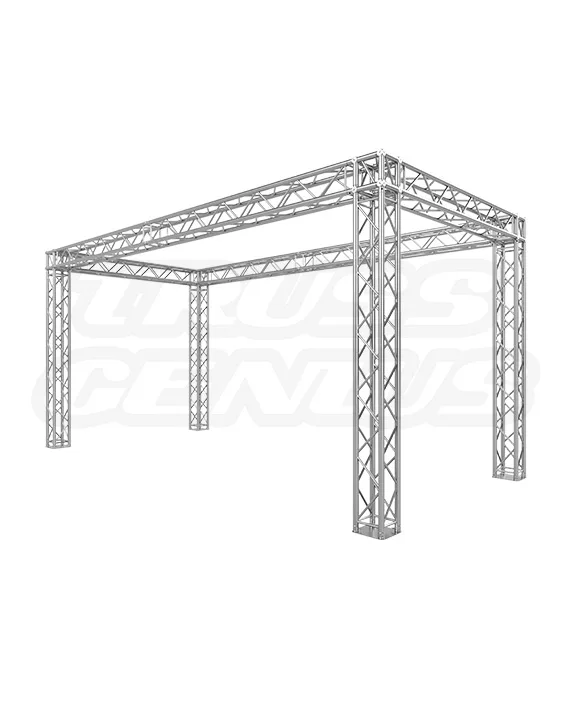
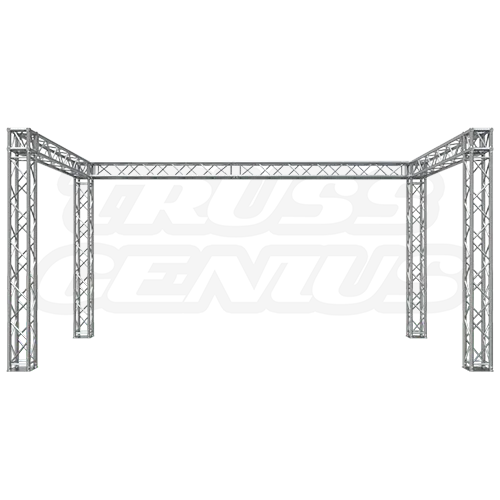
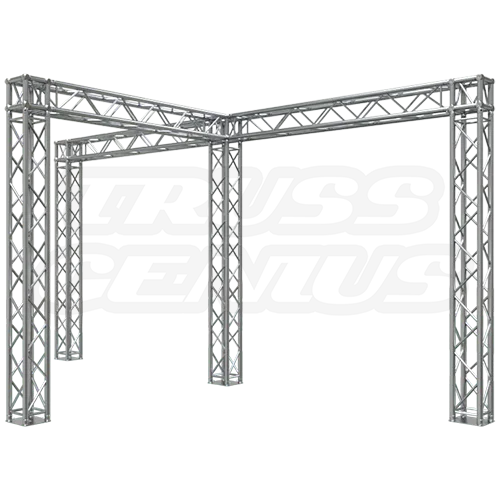
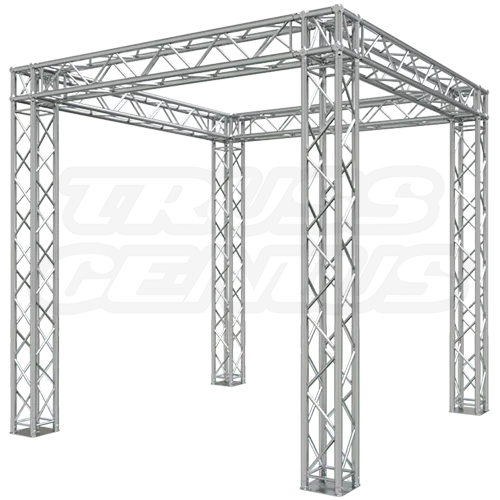
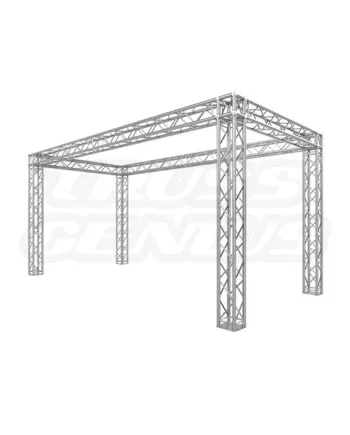
The EVT290S-Berlin is a modular 10x20 trade show booth built from the EVT290S 290mm square aluminum truss series. Designed for exhibitors who need flexibility across changing floor assignments, the Berlin uses one core component inventory to create up to four documented booth layouts.
Its medium-duty square truss construction provides a substantial overhead framework for branded graphics, lighting, monitors, signage, product displays, and other exhibit elements. At approximately 450 lb (204.11 kg), the Berlin is especially suited to businesses moving beyond a standard 10x10 booth but not yet requiring the size or weight of a larger island exhibit.
Four Reconfigurable Booth Layouts
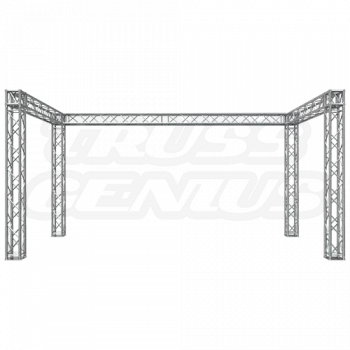
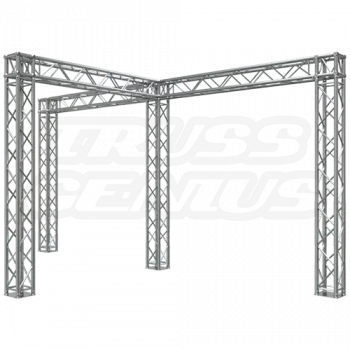
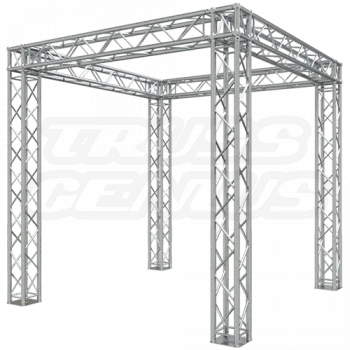
The EVT290S-Berlin is designed to support up to four documented configurations using the same structural components and connecting hardware. This gives exhibitors more flexibility when booth assignments, aisle exposure, entrances, or visitor-flow requirements change from one event to another.
Available layouts may include:
- Standard 10x20 inline booth configurations
- Alternate inline arrangements with different entrance locations
- Open-sided layouts for corner or end-cap assignments
- Small island-style configurations with access from multiple sides
Each arrangement must follow the corresponding assembly drawing, component locations, support conditions, and engineering requirements. The parts should not be rearranged into an undocumented structure solely because the connections appear to fit.
Who It’s For
- Growing regional exhibitors: Businesses attending multiple trade shows each year that need a professional 10x20 booth capable of adapting to different exhibit hall assignments.
- Companies expanding beyond a 10x10 booth: Exhibitors making their first move into a larger footprint who want a structural investment that can support several layouts and future expansion.
- Multi-show marketing teams: Organizations managing overlapping events, changing floor plans, and different regional venues that benefit from a repeatable component inventory.
- Corporate conference exhibitors: Medical, legal, financial, engineering, technology, manufacturing, and professional-service companies that need a polished structural presence at association and industry conferences.
- Product and technology brands: Exhibitors incorporating monitors, signage, lighting, demonstrations, and branded visual elements into a defined 10x20 environment.
- Exhibit designers and production companies: Teams that want a reusable EVT290S inventory for current booths, client projects, and future custom configurations.
Built for Growing Exhibit Programs
The Berlin is assembled from standard EVT290S Series components rather than parts dedicated permanently to one booth. As exhibit requirements change, the individual sections can be reused, expanded, or incorporated into other compatible structures.
- Expand the footprint: Add compatible EVT290S sections to develop larger inline, peninsula, or island booth layouts.
- Create alternate entrances: Reorganize documented components to accommodate different aisle positions and traffic patterns.
- Reuse the inventory: Incorporate individual sections into entrance structures, display walls, overhead grids, and other EVT290S systems.
- Replace individual components: Straight sections, corners, bases, couplers, pins, and safety clips are available separately.
- Protect the initial investment: Build on the original component package instead of replacing the entire booth as the exhibit program develops.
Browse additional products in the EVT290S Square Aluminum Truss Collection.
Assembly and Connection System
The EVT290S-Berlin uses conical couplers, tapered pins, safety clips, and bolted base connections to create secure and repeatable joints between the individual components.
The documented assembly information identifies a recommended crew of three to four people. A steel hammer and an M10 hex Allen wrench are used for the applicable connection and base hardware.
- Review the assembly drawing for the selected booth configuration.
- Confirm that every required section, corner, base, coupler, pin, safety clip, and fastener is present.
- Lay out the components on a clean, level surface according to the drawing.
- Inspect all structural components and connecting hardware before assembly.
- Assemble the upper framework at floor level whenever the approved installation method permits.
- Insert each conical coupler completely into the corresponding truss receiver.
- Install the tapered pins and secure every connection using the appropriate safety clip.
- Complete and tighten all required bolted base connections.
- Confirm that every connection is fully seated before raising or loading the structure.
Assembly should be performed only by personnel familiar with aluminum truss systems, conical connections, safe lifting procedures, and the applicable assembly drawing. The required crew size and lifting method may change based on the selected layout, venue conditions, and equipment already attached to the structure.
Documented Load Information
Available product documentation identifies distributed load values of:
- 10 ft span: Up to 200 lb per linear foot
- 20 ft span: Up to 120 lb per linear foot
These values must be applied only to the exact span, support arrangement, truss orientation, load type, and conditions identified in the applicable technical documentation. They should not be treated as universal ratings for every Berlin configuration.
- Do not exceed the documented capacity of any truss section, corner, connector, base, fastener, or attached component.
- Loads must be distributed according to the applicable engineering documentation.
- Do not place concentrated loads directly on conical connections or corner joints unless specifically permitted.
- Do not attach equipment to diagonal bracing unless the component is expressly designed and rated for that purpose.
- Do not assume the 10 ft span rating applies to a 20 ft span or alternate booth configuration.
- Review the complete structure whenever the support positions, dimensions, attached equipment, graphics, or load locations change.
Rear Scrims, Banners, and Ballast
A rear scrim, banner, fabric wall, or similar broad surface can create substantial lateral and overturning forces even when the material itself is lightweight.
Available Berlin documentation identifies a requirement of 1,400 lb of ballast at each individual corner when a rear scrim or banner is installed, unless the structure is directly anchored to an approved concrete slab.
- The 1,400 lb requirement applies independently to each affected corner and is not divided across the complete booth.
- The ballast must be positioned and connected according to the approved installation plan.
- Direct anchorage must be designed for the supporting slab and approved by the venue or property owner.
- Changing the banner size, material, location, or booth configuration may change the required ballast.
- All graphics and broad surfaces must be included in the engineering review.
- Ballast logistics should be coordinated with the venue before the event.
General-purpose sandbags should not be assumed to satisfy the documented requirement unless their total weight, placement, restraint, and connection method have been evaluated for the specific installation.
Inline and Small Island Use
The Berlin’s documented layouts include both inline-oriented and more open small-island configurations. However, the structural ability to create a layout does not automatically mean that the configuration complies with every trade show’s exhibit rules.
- Confirm the assigned booth type before choosing a layout.
- Review the show’s height restrictions, setback rules, sight-line requirements, and fire-code requirements.
- Inline exhibits may have different perimeter-height limits than island or peninsula booths.
- Obtain show-management approval before shipping or assembling the structure.
- Provide drawings or engineering documentation when requested by the venue or general contractor.
Outdoor and High-Airflow Installations
The EVT290S-Berlin is primarily positioned as a trade show exhibit structure. Outdoor use or installation in areas exposed to significant airflow requires additional evaluation.
- Outdoor installations require site-specific engineering.
- Use an approved ballast or anchoring plan.
- Include all banners, scrims, signs, monitors, and graphic panels in the wind-load evaluation.
- Establish operating wind limits and an active weather-monitoring procedure.
- Remove graphics or take the structure out of service when required by the approved weather plan.
- Do not operate the structure during unsafe wind or weather conditions.
Inspection and Component Care
- Inspect all truss sections, corners, bases, couplers, tapered pins, safety clips, welds, and fasteners before every assembly.
- Check the main chords for dents, bends, cracks, scoring, or other deformation.
- Inspect diagonal braces and welds for separation, distortion, cracking, or impact damage.
- Remove any damaged or questionable component from service immediately and clearly mark it “DO NOT USE.”
- Keep conical connections and receiver surfaces clean and free of dirt, metal fragments, and debris.
- Replace missing, bent, worn, or incompatible pins, clips, couplers, and fasteners.
- Do not drill, weld, grind, straighten, or otherwise modify a structural component without written engineering approval.
Component Compatibility
The EVT290S-Berlin is designed around compatible EVT290S Series components using the corresponding dimensions, conical connection geometry, materials, and structural documentation.
Although some products may be described as standard 290mm or F34-style truss, visual similarity and nominal outside dimensions do not establish structural compatibility.
Before combining components from another manufacturer, verify:
- Overall truss dimensions and chord spacing
- Connector diameter and taper geometry
- Receiver depth and pin-hole alignment
- Main chord and brace-tube dimensions
- Material and alloy specifications
- Weld design and manufacturing tolerances
- Structural capacity and engineering approval
Technical Drawings and Engineering Resources
A detailed 3D technical drawing with system dimensions and component identification is available for the EVT290S-Berlin. STEP and DWG files are also available upon request for exhibit planning and coordination.
Engineering reports are available as a separate service and should be requested during the purchasing process when required for:
- Venue or general-contractor approval
- Custom booth configurations
- Overhead lighting and monitor plans
- Ballast or anchoring calculations
- Outdoor installations
- Jurisdictional or stamped submittals
General component documentation does not replace project-specific engineering when the complete installation differs from the documented configuration or loading conditions.
How the Berlin Compares within the EVT290S Lineup
The Berlin, Borego, and Bigsur are all 10x20 systems built from EVT290S square truss, but each is intended for a different exhibit requirement.
- EVT290S-Berlin: A 450 lb mid-weight system with up to four reconfigurable inline and small-island layouts.
- EVT290S-Borego: A heavier four-column island structure with a dual-bay overhead frame.
- EVT290S-Bigsur: A substantially larger and taller system intended for applications requiring greater height and structural capacity.
The Berlin is the strongest fit when layout flexibility, a 10x20 footprint, and the ability to reuse the same component inventory are the primary considerations.
Why Purchase the EVT290S-Berlin from Truss Genius?
- Configuration planning: Assistance reviewing the available Berlin layouts and selecting an arrangement for the assigned booth space.
- Expansion support: Help developing a path from the original 10x20 system into larger EVT290S structures.
- Component identification: Support locating replacement sections, corners, bases, couplers, pins, clips, and fasteners.
- Technical resources: Access to available assembly drawings, dimensions, STEP files, DWG files, and load documentation.
- Engineering coordination: Assistance identifying when venue documentation, calculations, or stamped engineering may be required.
- Trade show experience: Practical guidance for inline, corner, end-cap, small-island, and multi-show exhibit programs.
Frequently Asked Questions
How much does the EVT290S-Berlin weigh?
The complete EVT290S-Berlin system weighs approximately 450 lb (204.11 kg).
How many booth configurations can be created?
The EVT290S-Berlin is designed to create up to four documented layouts using the same core component inventory. Use the current assembly drawing and parts list for each approved configuration.
Can the Berlin be used for both inline and island assignments?
The documented layouts include inline-oriented and small-island configurations. The selected layout must also comply with the specific trade show’s height, setback, sight-line, fire-code, and access requirements.
Does the 1,400 lb ballast requirement apply to each corner?
Yes. When the documented rear scrim or banner condition applies, the stated 1,400 lb requirement applies independently to each corner—not as one total divided across the booth. Direct anchorage to an approved concrete slab may be used when designed and authorized for the installation.
Can the Berlin be expanded beyond 10x20?
Yes. Compatible EVT290S components may be added to create larger or alternate structures. Any expanded layout must be reviewed for loading, support conditions, component locations, ballast, anchoring, and overall structural suitability.
Does the booth include assembly documentation?
A detailed 3D technical drawing with dimensions and component identification is available for the system. Contact Truss Genius to confirm the current drawing package provided with the selected configuration.
Are STEP and DWG files available?
Yes. STEP and DWG resources are available upon request for planning, visualization, and coordination.
Is an engineering report included?
Engineering reports are available as a separate service. Project-specific calculations, stamped drawings, venue submittals, and custom-configuration reviews may require additional engineering services.
What warranty applies to the system?
The product information identifies a one-year limited warranty against manufacturing defects. Warranty coverage does not extend to improper assembly, impact damage, overloading, unauthorized modification, incompatible components, or use outside the documented requirements.
Technical Resources and Project Support
Contact Truss Genius for current assembly drawings, component identification, STEP or DWG files, available load documentation, replacement components, engineering coordination, or assistance selecting one of the documented EVT290S-Berlin layouts.
Disclaimer and guidance statement: The purchase of this product does not approve or authorize a specific installation or use. A qualified professional should review the complete structure, selected configuration, loading plan, attachment methods, ballast, anchoring, venue requirements, supporting surface, environmental forces, and intended application whenever engineering review is required. Published load and ballast values apply only to the specific spans, supports, configurations, load types, attached surfaces, and conditions identified in the applicable technical documentation. Product information is provided as general guidance and may be updated without notice. Truss Genius Worldwide, LLC disclaims liability for errors, omissions, improper assembly, unauthorized modifications, incompatible components, unapproved configurations, or uses that have not been evaluated for the specific installation.


